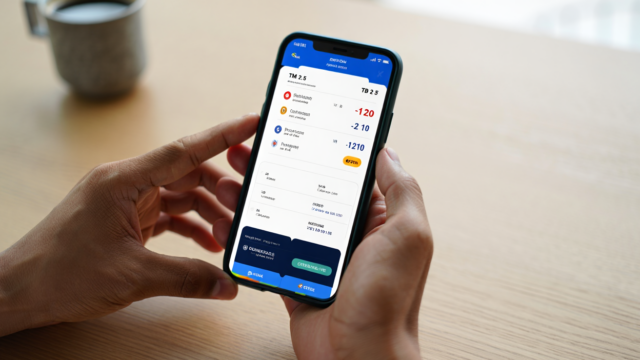

In football betting, a “to qualify” bet (also called advancement bet) is a wager on a team to progress to the next round of a knockout tournament, regardless of how the match concludes within regular time. This distinction matters significantly. When Russia faced Spain at the 2018 World Cup, the match ended in a 1-1 draw after 90 minutes. Bettors who wagered on Russia to win the match lost their bets, since the regular-time result was a draw. However, those who placed qualification bets on Russia to advance won, because Russia progressed through penalty kicks.
The qualification bet operates differently from standard match result wagers (marked as P1, X, or P2 in most betting interfaces). A standard match result bet only considers the 90-minute outcome. A qualification bet encompasses extra time and penalty shootouts in single-match playoffs, or aggregate scores and away goals in two-legged ties. In two-legged tournament rounds, a team can advance without winning either individual match if their aggregate score exceeds the opponent’s, or if they score more away goals in case of an aggregate tie.
When placing a qualification bet, you must locate the “To Qualify” market in your bookmaker’s interface. Odds for qualification bets typically reflect the team’s overall tournament performance, key player availability, and historical cup statistics. Atletico Madrid’s strong European cup record influences their qualification odds more than it would their regular league match odds. Similarly, goalkeeper performance metrics in cup competitions become crucial factors in calculating a team’s advancement probability.
In two-legged competitions like European cup rounds, qualification odds shift substantially after the first leg. A team losing the home match faces longer odds to advance in the second leg, but these odds account for home-field advantage and the potential for extra time or away goals.
Automatic Football Betting Scripts: Technical Reality
An automatic football betting script is software that detects betting opportunities, calculates bet sizing, and places wagers across bookmaker platforms without manual intervention. The technical infrastructure involves multiple components working in synchronization.
The foundation requires browser automation tools to interact with bookmaker websites programmatically. These tools simulate user actions and submit bet slips. Some bookmakers offer API access (though most restrict this), allowing direct bet placement without website interaction.
The detection layer identifies qualifying bets through pattern-matching. Scripts monitor bookmaker pages for odds movements that deviate from baselines. In one documented case, a user observed odds spiking 30-50 percentage points above expected values at a specific minute in matches within a particular sport. He calculated a 25% edge per 100 flat bets at that trigger moment and sought automation to place bets whenever this pattern appeared. His solution involved MarketFeeder with a custom trigger condition or a simple browser script that monitored odds and auto-filled bet slips when thresholds were reached.
The anti-detection layer presents the largest operational challenge. Bookmakers actively identify and limit accounts demonstrating automated betting behavior. Accounts placing bets at identical amounts, at inhuman speeds, or from the same IP address flag as suspicious. Solutions include rotating IP addresses through proxies, spreading bets across multiple accounts, and implementing delays between actions.
A functional betting bot must operate continuously on a remote server. Forecasts arrive as text messages via Telegram, containing team names, match types (pre-match or live), and bet selections. The bot parses text, searches the bookmaker’s current odds for the specified match, and places bets across accounts if needed. Should odds shift during placement, the bot restarts the search or aborts if new odds fall below profitability thresholds. Bookmakers increasingly block these systems through account restrictions, odds limiting, and account closure.
Financial Management Strategies in Football Betting
Bankroll management separates sustainable bettors from those who deplete capital through poor bet sizing. Three primary approaches exist: flat betting, the dogon (Martingale) system, and ladder betting.
Flat betting maintains a fixed stake for every wager, either in absolute units (always betting $50) or as a fixed percentage of bankroll (always betting 2% of current funds). This approach minimizes variance and prevents catastrophic losing streaks from eliminating capital.
The dogon system (also called Martingale chasing) increases bet size after each loss, with the goal of recovering all losses plus winning a profit equal to the initial stake. If you lose a $50 bet, you bet $100 on the next match to recover the loss plus win $50. The system works mathematically until an extended losing streak exceeds your bankroll or hits bookmaker maximum stake limits.
Ladder betting commits your entire remaining bankroll to successive bets at low odds. Place $5,000 on a 1.5 odds match. If it wins, you have $7,500. Bet all $7,500 at 1.5 odds again. Three consecutive wins turn $5,000 into $16,875. However, one loss liquidates the entire amount. Ladder betting is high-risk, suitable only for bettors with substantial bankrolls and exceptional prediction accuracy.
No strategy guarantees profit in football betting. The most reliable approaches combine statistical analysis with disciplined capital preservation. They systematize play, reduce impulsive decisions, and minimize losses during inevitable downswings. Success requires identifying genuine edges-opportunities where bookmaker odds overestimate certain outcome likelihoods-and executing at scale with consistent bet sizing.