
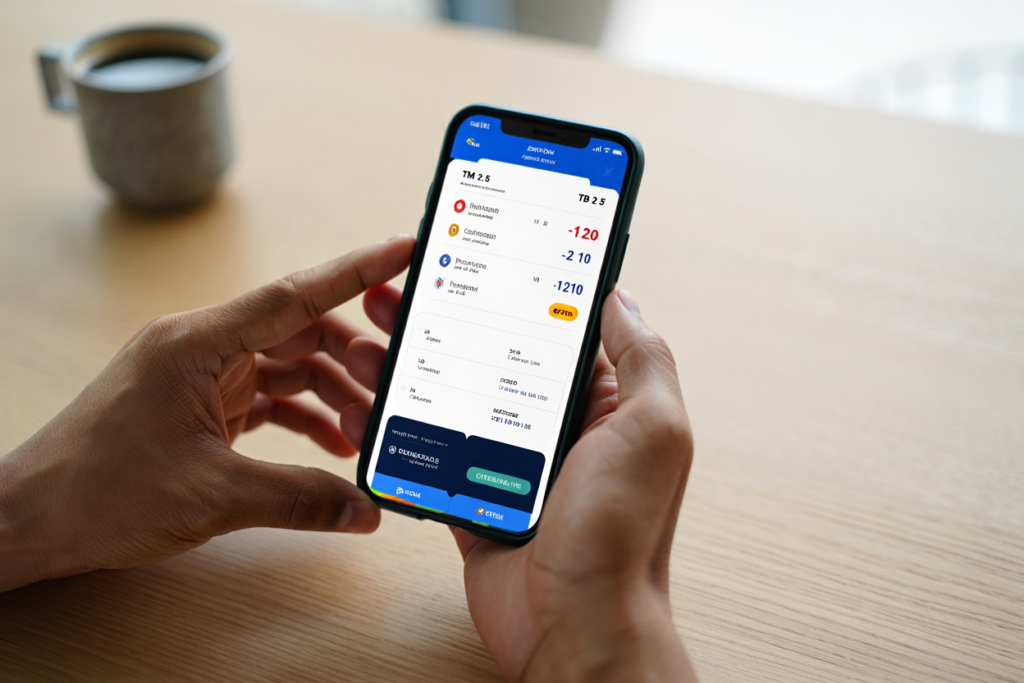
TM stands for “total less” (or “total minus” in some regions). When you see TM followed by a number in a betting line, it means you’re betting that the total number of goals in a match will be fewer than that specified amount. For example, TM 2.5 indicates a wager that the match will end with 2 or fewer goals combined.
TB represents “total more” (or “total greater”). TB 2.5 would mean betting on 3 or more goals. These markets form the backbone of total betting in football, allowing punters to focus on the match outcome separate from the final scoreline.
Sportsbooks set totals based on team strength, playing style, and historical data. A defensive-minded matchup might carry a total of 2.0, while an attacking encounter could be set at 3.5. The fractional numbers exist specifically because they eliminate pushes or ties-you cannot score exactly 2.5 goals, so every bet has a clear winner.
How Totals Work: Reading the Odds
Each total comes with its own odds, typically displayed alongside the number. A bet on TM 2.5 at -110 means you must wager $110 to win $100, reflecting the implied probability that fewer than 2.5 goals will occur. TB 2.5 at -110 would carry the same price in balanced markets, though odds shift as bettors place money on either side.
The total doesn’t predict the score itself-TM 2.5 wins on a 1-0, 2-0, 0-0, or any result with two goals or fewer. The strategy lies in assessing whether a matchup will lean toward a tightly contested, low-scoring affair or an open, goal-heavy contest. Teams missing key strikers, playing away from home, or facing strong defensive opponents often see lower totals. Recent form matters considerably; a team in poor defensive shape might push totals upward even if historical averages suggested a lower number.
World Cup Winner Betting and Market Odds
For the 2026 FIFA World Cup, sportsbooks including Fonbet provided outright odds reflecting each nation’s perceived chances. Tournament odds typically favored traditional powerhouses: Brazil at 6.50, Argentina at 7.00, France at 7.50, and England at 8.00.
These odds mean a $100 bet on Brazil at 6.50 returns $650 in profit plus your original stake if they lift the trophy. Longer shots-smaller nations or second-tier European teams-carried odds of 20, 30, or even higher. The actual tournament structure matters immensely; a team’s path through the group stage and bracket positioning directly influences their real winning chances, yet the sportsbook sets initial odds months in advance based on squad quality and historical performance.
Specialized World Cup Betting Markets
Beyond picking an outright winner, modern sportsbooks offer granular options. Star players were frequently paired in combination bets during recent World Cup cycles, allowing bettors to wager on a nation to win alongside specific player performance outcomes. Such combination tickets appeal to those seeking larger returns from smaller stakes.
Group stage predictions formed another common wagering avenue. Top-ranked teams typically carried lower odds when facing standard opponents, with winning odds reflecting their historical strength. Early tournament results often triggered sharp betting shifts on tournament winner odds, as upsets or dominant performances reset market perception.
Reading Line Movement in Football Betting
Odds shifts-called line movement-occur constantly as bettors assess team news and market sentiment. If one nation’s odds to win a group-stage match move from 1.80 to 1.65, substantial money has backed them, signaling confidence among informed bettors. Such movement appears across all major markets: match winners, totals, and long-term futures like tournament winner.
Total line movement occurs as bettors react to team developments. Injuries, roster changes, and tactical adjustments all influence whether odds shift upward or downward. Understanding these movements helps bettors determine whether they’re finding value or chasing consensus.
The 2026 World Cup tournament spans June 11 through July 19 across the United States, Canada, and Mexico, featuring an expanded 48-team format with group-stage play concluding June 27, playoffs beginning June 28, and the final on July 19. This extended schedule creates multiple betting opportunities across nearly six weeks, from preliminary group matches through knockout rounds.
Practical Approach to Total Betting in Football
Successful total bettors look beyond raw team statistics. Weather conditions, team travel and rest days, head-to-head history, and tactical matchups all influence whether a contest unfolds as a tight 1-0 battle or a high-scoring affair. A total set at 2.5 offers different risk profiles when assessing teams with distinct defensive and attacking characteristics.
The split between TM and TB odds reflects public perception. If the public heavily favors TB 2.5, the sportsbook raises that price and lowers TM 2.5 to balance their risk. Contrarian thinking-backing TM when TB appears overvalued-has historically rewarded disciplined bettors. Conversely, following sharp action into low prices sometimes proves wise; when professional syndicates move a total by half a goal within hours of kickoff, they typically hold stronger information than the broader public.
Total betting appeals to those seeking outcomes separate from specific scorelines. You win TM 2.5 whether the final is 0-0, 1-0, or 2-0. This simplicity, combined with the fundamental nature of goal totals in football, makes understanding TM and TB essential for anyone wagering on the sport.