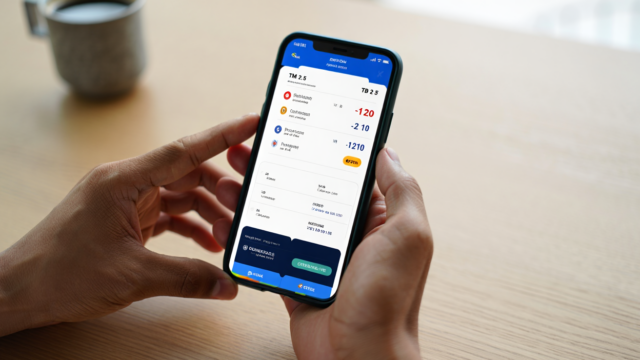

Major European sportsbooks offer competitive pricing across domestic and international football leagues. Today’s matchups reflect real-time market shifts, with lines updating before kickoff based on team news, injury reports, and betting volume. Markets cover Premier League, La Liga, Serie A, Bundesliga, and Ligue 1, alongside other domestic fixtures.
Check odds movement during the final 30 minutes before kickoff. Sharp bettors often spot value when pricing drifts from opening lines, especially in matches with late lineup announcements. Mobile platforms display odds updates every 15 seconds, crucial for capturing favorable pricing before sharp money adjusts the numbers.
Understanding Bookmaker Odds Structure for Today’s Matches
Decimal odds remain the standard format on most European sportsbooks. A fixture showing 2.50 means a $10 stake returns $25 total ($15 profit). Fractional odds, common in UK books, express the same bet as 3/2 (meaning $2 wins $3). The relationship between the two formats is straightforward: decimal 2.50 equals fractional 3/2.
Over-under totals typically range from 2.5 to 3.5 goals in league matches. Sportsbooks adjust these based on team form, head-to-head trends, and weather conditions. A match between high-scoring attacks usually opens at 3.0 or higher, while defensive-minded teams produce lines at 2.5 or below.
Spreads function differently in football than in basketball. Instead of point margins, bookmakers set handicap bets where the stronger team receives a negative goal line (minus 1.5 or 2.0) and the underdog gets a positive adjustment. This levels the betting outcome and creates two roughly even-money opportunities.
AI for Football Betting: How Algorithms Shape Modern Predictions
Artificial intelligence systems now analyze thousands of variables before each match, from player tracking data to atmospheric pressure effects. These algorithms process historical performance metrics, current form ratings, squad composition, and even social media sentiment to generate predictions. The best AI models achieve 55-58% accuracy on outcomes over large sample sizes, marginally better than sharp bettors using traditional methods.
Machine learning systems identify patterns humans miss. An AI tool might recognize that teams playing their third match in eight days suffer specific defensive vulnerabilities or that certain goalkeepers perform significantly worse in evening kickoffs. These micro-patterns accumulate across seasons and inform betting edges.
Sportsbooks themselves employ machine learning to set opening odds and adjust lines as money flows in. The algorithm processes millions of historical bets, identifying which outcomes books consistently misjudge. This prevents arbitrage situations where bettors exploit pricing gaps across platforms.
AI picks available through betting services should be treated as tools, not certainties. A system showing 65% win rate over one season often regresses toward 52-55% in the next. The best approach combines AI recommendations with manual verification: check team news, referee assignments, and weather forecasts yourself before committing money.
2026 World Cup Bookmaker Odds and Long-Term Betting Strategy
The 2026 FIFA World Cup takes place across the United States, Canada, and Mexico from June 11 through July 19. Current odds reflect assessments based on recent qualification tournaments and club form trajectories.
Spain commands the shortest odds at 5.50 to lift the trophy. Their stable squad, possession-based system, and strength in European qualifying establish them as favorites. England follows at 7.00 after reaching the Euro 2024 final, though questions about midfield depth persist. France sits at 7.50, benefiting from a young core and consistent tournament pedigree. Brazil carries 8.50 odds despite inconsistent qualifying results, banking on historical tournament success. Argentina, the defending champions, faces odds of 9.00 as their aging core becomes harder to replace.
Ukraine holds 600.00 odds to win the tournament, reflecting their need to navigate playoff qualification first. Long-shot odds expand dramatically for smaller federations: Iceland at 2000.00, Jamaica at 2500.00. These extreme numbers represent pure speculation rather than analytical predictions.
Bettors placing 2026 World Cup wagers should understand that six-month-plus odds carry extreme variance. Injuries, coaching changes, and unexpected young player breakthroughs reshape probabilities weekly. A midfielder’s ACL tear at club level can deflate a nation’s odds by 50 points or more. Conversely, an unexpected World Cup qualifying surge (similar to Greece’s Euro 2004 miracle) creates long-odds winners for patient bettors.
Group stage markets provide more granular betting opportunities. Separate lines open for each group winner and runner-up position. These mid-range bets offer better value than outright tournament winners, as they involve fewer matches and less compound variance.
Identifying Value in Today’s Bets on All Football Matches
Value exists when the implied probability of bookmaker pricing differs from the true win probability. If a sportsbook offers 2.20 on a team with genuine 50% win chances, the implied probability is 45% (1 divided by 2.20). This represents an 11% edge compared to fair odds of 2.00.
Finding these edges requires two steps. First, calculate what pricing should be using your own analysis. Compare expected probability against the bookmaker’s implied probability. Second, track your picks and actual results over 50-100 bets minimum. Many bettors feel confident in a single pick but show losing streaks across larger samples.
Team form rating systems help identify value. Assign points for recent results: three points for wins, one for draws, zero for losses. A team averaging 1.8 points per match over the last ten games is significantly stronger than one averaging 0.9. However, account for opponent quality. Beating last-place teams inflates form ratings.
Fixture congestion creates value opportunities throughout the season. Teams playing midweek European competitions often show fatigue in weekend league matches. Check whether players rested in earlier games, as managers vary rotation strategies dramatically.
Monitoring Odds Movement and Timing Your Bets
Sharp bookmakers adjust pricing within 30 seconds of line moves appearing on competing sites. They employ traders monitoring multiple platforms simultaneously, protecting against arbitrage. Slower books lag by several minutes, creating temporary pricing gaps.
Competitive sportsbooks typically maintain tight pricing against each other on popular matches. For niche leagues or lower divisions, wider gaps emerge. Bettors comparing pricing across three to five major books capture an extra 0.15-0.25 in decimal odds regularly, compounding returns over months.
Pricing tends to compress toward kickoff as casual money arrives. A 2.40 opening might shrink to 2.15 by match time. Professional bettors buy early when volume is light. Weekend matches attract maximum public money late, pushing pricing in favor of contrarian positions established midweek.
Weather impacts soccer profoundly yet bettors often ignore forecasts. Heavy rain reduces totals by 0.25-0.50 goals as technical play suffers. Wind speeds above 20 mph affect corner counts and high passes. Check 10-day forecasts from reliable meteorological sources rather than relying on bookmaker weather adjustments, which lag real conditions.
Bankroll Management and Betting Responsibly
Professional bettors allocate no more than 2-5% of total bankroll per individual wager. A bettor with $1,000 betting $50 per slip maintains long-term sustainability. This ensures that even a 10-bet losing streak doesn’t catastrophically damage the fund.
Unit sizing scales with confidence. A pick with marginal edge earns 1-unit allocation. A pick with strong analytical support and pricing representing clear value earns 2-3 units. This prevents overbetting weak spots and focuses capital where edges matter.
Avoid parlay betting unless you possess true expertise. A three-leg parlay at 8.00 odds requires each leg to be underpriced significantly. Most casual bettors underestimate correlation between matches; injury news affecting one team often affects others in the same geographic region.
League-specific betting requires different approaches. Domestic cups (Carabao Cup, DFB-Pokal, Coppa Italia) feature fixture overload and squad rotation, creating unpredictable results. European competitions like Champions League attract tighter pricing but better data availability. International friendlies show enormous variance as managers test lineups.
Set a monthly loss limit and honor it. If you lose 5% of bankroll, stop betting and analyze what went wrong. Did you chase losses with bigger bets? Did you ignore injury reports? Did you fail to verify pricing before placement? Journaling each decision builds pattern recognition over time.