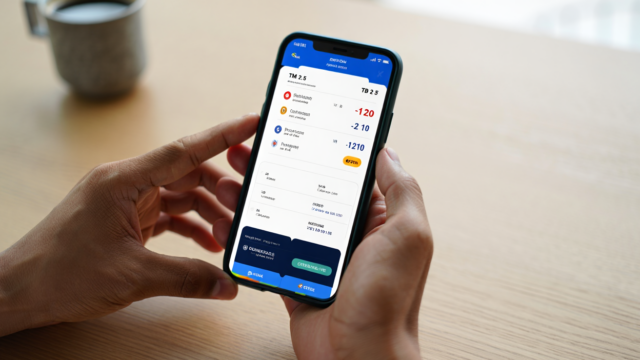

Football betting starts with choosing a licensed bookmaker and registering an account. After verification and deposit, you select a championship and study the available match offers before setting your stake. The most crucial step is understanding what you’re actually betting on, because odds shift constantly and bookmakers adjust their lines quickly based on market movement.
The fundamentals matter more than luck. Successful bettors study team form, injury reports, head-to-head records, and weather conditions. Home advantage exists but varies by competition: a team playing at their home stadium has a different edge than one designated as the “home” team in a neutral venue tournament like the World Cup.
The 1X2 Bet: Most Popular and Most Straightforward
The 1X2 format dominates football betting worldwide. Here’s what each symbol means: 1 represents the first team (typically the home or favorite), X is a draw, and 2 is the second team (away or underdog). Settlement occurs after 90 minutes plus stoppage time. Extra time and penalty shootouts don’t count. This distinction matters significantly in cup competitions where draws trigger additional play.
In tournaments, “home team” designation doesn’t always match the host country. During the 2018 World Cup, Uruguay was listed as the home team against Russia despite Russia hosting the entire tournament. If you bet on Japan to win against Argentina and Japan wins in regulation, your 1X2 bet on Japan (marked as 1) wins. Any other result loses the stake.
Some bookmakers label this format differently, using P1, X, P2, where P stands for “pick.” The logic remains identical.
Beyond Basic Outcomes: Other Wagers Worth Considering
Double chance bets cover two outcomes. You might back either Team A or a draw, excluding Team B entirely. This reduces odds compared to a straight 1X2 bet on Team A but improves your probability of winning. It’s useful when you’re confident one team won’t win but uncertain whether the opponent or a stalemate is more likely.
Totals bets focus on combined goals rather than who scores them. Over 2.5 goals means three or more goals in the match. Under means two or zero. Handicap betting adjusts the actual score: a -1 handicap on the favorite means they start the calculation one goal down, so they must win by two or more to cash your ticket.
Exact score predictions require naming the final result precisely. Betting that England beats France 2-1 pays substantially more than backing England to win, but it’s correspondingly harder to hit. Some bettors combine multiple exact scores into parlay bets, multiplying potential returns but requiring every selection to be correct.
Both teams to score (BTTS) is straightforward: each team must find the net. Statistics and recent form heavily influence these odds because some teams defend deeper than others.
Long-term bets lock in your stake for an entire season or tournament, predicting league champions, cup winners, or award recipients. World Cup winner bets fall into this category. Parlay bets (called combos or accumulators) chain multiple selections together, requiring all to win for payout. A single loss eliminates the entire ticket but odds multiply accordingly.
Selecting Bet Types Based on Your Analysis
Your chosen bet type should match your actual knowledge. If you can identify which team has the advantage but don’t trust your goal prediction, use 1X2 or double chance. If you’ve studied defensive records and shot conversion rates extensively, exact scores become viable.
Bookmakers with lower margins-the built-in profit difference between their payout odds and true probability-offer better value. A margin of 2-3% is excellent; 5% is acceptable; above 7% punishes you systematically. Wide line variety indicates confidence in their pricing, while reliable customer support matters when disputes arise. Bonuses are secondary to fundamental odds quality and payment reliability.
World Cup Winner Bets and Tournament-Specific Markets
The World Cup generates specialized betting markets beyond basic outcomes. Standard markets include the tournament winner, finalist pair predictions, semifinal outcomes, quarterfinal matchups, round of 16 advancement, and top scorer awards.
Top scorer betting accounts for tiebreakers precisely: total goals first, then assists, then fewer minutes played. Penalties and own goals don’t count. This specificity matters because a striker might score twice but receive fewer minutes than another who scored twice with more playing time.
Additional markets cover the winner’s group assignment, whether the winner exits via penalty shootout (yes/no), Golden Ball (best player), Golden Glove (best goalkeeper), and continental winners. Best Europe/South America/Asia bets require the champion to originate from that continent; tiebreakers follow elimination stage results, group position, total points, goal difference, and goals scored.
Comparison markets allow you to pick which team advances further: will Mexico or Canada reach the quarterfinals? Will Japan or Spain win their group? These force you to think relatively rather than absolutely, which sometimes reveals better value than individual team bets.
Analyzing Betting Odds and Market Movement
Odds represent probability expressed as decimals at most major European bookmakers. An odd of 2.0 means breaking even: a 10 euro bet returns 20 euros. An odd of 3.5 implies lower probability; you need longer odds when fewer people predict that outcome. Odds adjust constantly before kickoff based on betting volume, team news, and sharp bettors’ activity.
Bookmakers set initial lines using algorithms incorporating recent form, historical records, injuries, and head-to-head statistics. When significant money arrives on one side, odds shift to balance their risk. Experienced bettors spot when a line has moved unfavorably-perhaps the team you wanted to back has drifted to worse odds-and move on to better opportunities.
Champions League, Europa League, and Conference League dominate club betting because these competitions draw massive betting volume and wide betting lines. You’ll find more granular markets and better odds in these competitions than in domestic leagues of smaller nations.
Practical Approach to Selecting Teams and Matches
Start with leagues and competitions you actually follow. Casual betting on unfamiliar teams typically loses money because local knowledge-about coaching changes, squad depth, or regional form-escapes casual observers. If you watch English Premier League matches regularly, that’s your edge. Build from what you know.
Injuries shift odds significantly. A team missing its starting goalkeeper or primary scorer faces genuine disadvantage that casual bettors often underestimate. Check lineup news 24 hours before matches; some information only emerges late.
Home advantage averages around 55% win rates for home teams across major leagues, but this varies by region and competition level. Cup matches at neutral venues eliminate it entirely. Tournament matches have weaker home advantage because travel affects both teams.
Recent form matters more than season-long statistics for form analysis. The last five matches reveal whether a team is improving or declining. A side on a winning streak might command better odds than their long-term quality warrants, creating undervalued opportunities for contrarian bets.
What Separates Winning Bettors from Casual Punters
Successful bettors treat this as a skill requiring research, not a form of entertainment. They track their bets, calculate actual ROI, and adjust strategy when results show a pattern of losses in specific markets.
They also understand that bookmakers have advantages: fixed margins, sophisticated risk modeling, and access to information from millions of concurrent bets revealing where sharp money is flowing. You cannot consistently beat them at prediction; you can only find situations where their odds don’t match actual probability-called value betting.
A bet has value when your assessed probability of an outcome exceeds the implied probability from the bookmaker’s odds. This requires mathematical discipline and emotional control. Even sound bets lose sometimes. What matters is that over 100 bets, if you consistently identify value, probability works in your favor.
Arbitrage opportunities (guaranteed profit by betting opposite outcomes at different bookmakers) exist but disappear almost instantly in major markets due to automation. They’re not a realistic strategy for individual bettors unless you specialize in minor leagues or small bookmakers with slower systems.
Many matches are fixed, particularly in lower divisions and certain regions. This isn’t paranoia; it’s a documented problem in some countries. Stick to major leagues from transparent jurisdictions where fixing is logistically difficult and detection consequences severe.
Football betting remains the most popular sport for wagering precisely because almost everyone watches matches and feels they can predict outcomes. That accessibility creates mispricing opportunities for those willing to study systematically rather than bet emotionally.