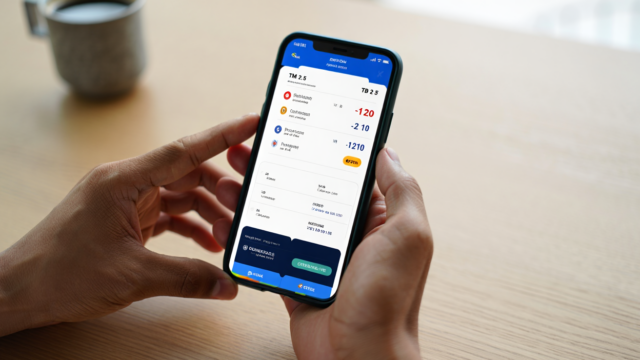

What does X1 mean in football betting? It’s a double chance bet covering two possible outcomes from a single match. X1 wins when either the home team wins or the match ends in a draw. You lose only if the away team wins. This type of wager sits between a full moneyline bet and a handicap, offering a middle ground of coverage.
The X notation stands for “draw” in football betting, while 1 represents the home team. So X1 combines these two outcomes into one selection. If you bet on Manchester United at home, an X1 wager pays out whether United wins or the result is 1-1, 2-2, or any other draw.
Bookmakers price X1 bets lower than a straight home team win because you’re covering an extra outcome. This appeals to bettors who believe the home team won’t lose but aren’t confident enough in an outright victory. The odds typically range from 1.50 to 1.80 depending on how strong the home team is favored. Teams with a significant home advantage might have X1 odds closer to 1.50, while more evenly matched contests push them toward 1.80.
X1 sits alongside X2 (away win or draw) and 12 (either team wins, excluding draws). In a match between teams of similar strength, X1 and X2 often have nearly identical odds. When there’s a clear favorite, the double chance covering that favorite naturally carries lower odds. Understanding these three double chance options helps you construct smarter bet combinations.
Yellow and Red Cards Betting
Cards in football betting form a distinct category that attracts bettors seeking patterns beyond match outcomes. Yellow card wagering remains profitable because sportsbooks receive less action on these markets compared to goals and match winners, meaning the odds reflect less sophisticated analysis.
Yellow card betting comes in several flavors. The most common is totals, where you bet over or under a set number like 2.5 or 3.5 cards per match. A match with five yellow cards wins an over 4.5 wager, while three yellows wins under 4.5. These totals apply to regular time unless the betting slip specifies otherwise; extra time cards count, but penalty shootout cards do not.
Individual team totals let you bet on how many yellow cards a specific side receives. Team A might be set at over 2.5 yellows, meaning you win if they collect three or more. This becomes valuable when you notice that one team plays more aggressively or faces a referee known for stricter enforcement.
Handicap betting on cards works similarly to goal handicaps. A -1.5 handicap means a team must receive at least two yellows to cash your ticket. Bettors analyze which squads commit more fouls, which players have poor discipline records, and which officials call matches tightly.
Match card betting determines which team accumulates more yellows. Even if the total reaches only three cards, betting on which side gets the majority remains viable. First and last yellow card bets specify a time window when the card will be issued. Placing a wager on the first yellow arriving between minutes 20-35 requires precise timing.
Red cards follow a simpler scoring system within these same bet types. One red card equals two points in the calculation, while two yellow cards to the same player also equal two points. Cards issued to substitutes and coaching staff typically don’t count, though betting sites state their specific rules clearly in terms and conditions.
Several factors influence card markets. Strict referees produce higher card totals naturally. Derby matches between fierce rivals see more cards because emotions run higher and challenges become more aggressive. Team discipline matters significantly-some clubs train players to avoid needless cautions while others attract cards through playing style. Individual player temperament matters too; a striker prone to protesting decisions receives more yellows than one who stays silent.
Single Bets Explained
What is a single bet in football betting? It’s the simplest wager type: one selection on one outcome. You pick a match, choose an outcome like home win or over 2.5 goals, place your stake, and the bet either wins or loses. There’s nothing compounded or combined with other selections.
Single bets contrast with accumulators where multiple selections combine into one ticket. An accumulator requires every leg to win for the whole bet to pay out, but a single stands alone. Win a single on a 1.80 odds selection with a $100 stake and you receive $180 back.
The advantage of singles is simplicity and control. You face no cascading failures where one incorrect prediction wipes out your entire combination. Each single lives or dies on its own merit. Professionals often build their income through consistent single-bet picking rather than chasing bigger payouts through parlays that rarely hit.
Bookmakers make single bets equally available in live betting, allowing you to place wagers during matches. A single on “over 1.5 goals” placed when the score stands at 1-0 offers faster odds than pre-match because the outcome depends only on the remaining match time.
The downside appears minimal until you realize that single bets demand higher accuracy rates to show profit. If you win 55% of your single bets at average -110 odds (like standard American football betting), you turn a small profit. That same 55% win rate on a parlay with four legs loses money massively because the profit margin on each unit decreases.
Neural Networks and AI in Football Betting Predictions
Neural networks for football betting combine supervised learning on historical match data with real-time feature engineering. These models train on datasets containing thousands of matches, learning patterns that human analysts miss because the relationships between variables involve multiple layers of abstraction.
A typical football prediction neural network accepts inputs like team strength ratings, recent form, injuries, home advantage, head-to-head records, and player availability. The model processes these through hidden layers that recognize that certain combinations of factors (like a strong team missing their captain playing at altitude) produce specific outcome probabilities. The network outputs predicted win percentages for each result.
Popular architectures include recurrent neural networks (RNNs) that process match sequences chronologically, understanding that a team’s last five results create momentum affecting the next match differently than their season average. Convolutional neural networks (CNNs) work well for spatial data like player positioning, identifying how defensive shape influences scoring likelihood.
Gradient boosting models, particularly XGBoost and LightGBM, often outperform pure neural networks for football prediction because they handle the non-linear relationships in sports data efficiently. These models work by building many weak learners sequentially, each correcting errors from its predecessor.
The practical challenge lies in data quality. AI models performing well on historical data frequently disappoint on live predictions because football changes. A team’s recent injuries, managerial tactics, or transfer activity shifts patterns that past data revealed. Models trained in 2022 may perform poorly in 2024 if the league’s style evolved.
Bettors using AI predictions must understand that models generate probability estimates, not certainties. A model suggesting 65% probability for a home win doesn’t guarantee victory at those odds. Professional bettors compare model probability outputs to bookmaker odds, only betting when they find value-when their model’s probability exceeds the implied probability in the odds offered.
The most successful approaches combine multiple models. One neural network predicts goals, another models match outcomes, a third focuses on cards, and a fourth estimates the likelihood of specific score lines. Weighting these predictions based on each model’s historical accuracy produces more accurate forecasts than any single system.
Practical implementation requires consistent updates. Models trained on 2024 data outperform 2023 models even for the same season because player transfers, tactical evolution, and injury updates matter substantially. Real-time feature updates incorporating team news minutes before kickoff capture short-term probability shifts that static models miss.