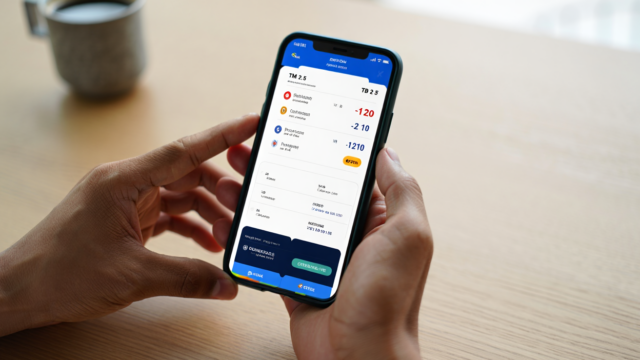

A football betting algorithm is fundamentally a repeatable system of actions designed to organize your wagering decisions. Most bettors place wagers without any structured approach, which explains why they lose consistently. The difference between casual wagering and profitable betting lies in applying a methodical framework that eliminates emotional bias and relies on data-driven decisions.
Betting strategies divide into two distinct categories: financial management and game-based analysis. Financial strategies control how much you stake on each bet, while game-based strategies determine which matches and outcomes you should target. Neither works effectively in isolation. A sound bankroll management system cannot rescue poor selection of bets, just as excellent match analysis fails if you risk your entire fund on a single wager.
Financial Management: Controlling Your Bankroll
The foundation of any sustainable betting operation is strict bankroll management. This determines how much you can afford to lose before exhausting your capital, and more importantly, how you rebuild after inevitable losing streaks.
The flat stake method represents the simplest approach. You bet a fixed percentage of your bankroll on each wager, typically between one and five percent. If your bankroll is $1,000, a three percent flat bet means you stake $30 on every selection. This method provides consistency and prevents catastrophic losses from single bets.
The Kelly Criterion offers a mathematically optimized approach. This formula calculates the exact stake percentage based on your perceived edge and the odds available. While more complex than flat betting, it theoretically maximizes long-term growth. However, most recreational bettors apply reduced Kelly (half or quarter Kelly) to avoid aggressive swings that could wipe out their funds.
The Martingale system, known in football betting circles as “dogon,” increases your stake after each loss with the goal of recovering all previous losses plus securing a profit on the next win. The formula for your next bet after a loss is: (total losses plus desired profit) divided by (odds minus one). For example, if you lost $100 and want to win $50 on your next bet at odds of 2.50, you would stake $150. If it wins, you recover losses and gain your target profit. The critical weakness of this approach is that a prolonged losing streak requires exponentially larger stakes. A sequence of just five losing bets at 2.0 odds requires a sixth bet worth 32 times your initial stake to recover. Bookmakers set maximum stake limits specifically to prevent this strategy from working indefinitely.
Game-Based Selection: Where Your Edge Actually Lies
Identifying undervalued outcomes is where sophisticated bettors earn their edge. Bookmakers set odds based on probability, but public bias creates systematic mispricing. Recreational bettors overwhelmingly favor betting on strong teams at low odds, which causes bookmakers to compress those prices further. Conversely, underdogs become overpriced because they’re underbet by the general public.
Statistical analysis forms the backbone of professional selection. You should examine historical performance data: how many goals teams typically score at home versus away, how many they concede against specific opponent types, and how these metrics shift based on recent form. A team’s current injury status, recent management change, or position in the table relative to relegation or title race provides context that raw historical data cannot capture.
Betting on Underdogs: Recognizing Value in Plus Handicaps
Positive handicaps represent one of the most profitable niches for football betting, particularly when applied to underdogs. A plus handicap (sometimes called a positive handicap or underdog bet) means the selection starts with a goal advantage on the betting slip. A +1.5 handicap on an underdog means they only need to lose by one goal for your bet to win, or win/draw the match.
The motivation differential creates the strongest opportunities. Identify matches where the favorite has diminished motivation due to competing domestic cup finals, European competition, or already securing the title or avoiding relegation. Simultaneously, the underdog must be fighting for something concrete: staying up, pushing for promotion, or winning the league in a tight race. When a top team travels to a rival playing for crucial points and rotates their squad, the underdog’s plus handicap inflates to unrealistic levels. Liverpool versus Watford exemplifies this pattern. Early-week odds favored Liverpool heavily, but as the match approached and team sheets leaked suggesting rotation, the +1.5 handicap price improved from 6.2 to 7.4. The underdog needs only to avoid a thrashing, not necessarily win.
Seasonal timing matters considerably. At the season’s start, sample sizes are small, and bookmakers lack information on how squads perform together. A promoted team with significant player investment might be underpriced in month one. Conversely, league favorites who lost key players might be overpriced despite reduced squad depth. Rivalry matches distort odds further. Local derbies rarely follow standard rating systems; passion often overrides expected quality differences.
Double Chance Strategy for Underdog Hedging
Double chance bets cover two of three possible outcomes: 1X (home win or draw), X2 (draw or away win), or 12 (home or away win, excluding draw). When applied to underdogs with plus handicaps, this creates a strong hedge. If you back an away team at +1.5 with double chance (X2 at the match level), you win if they draw or lose narrowly. The odds reduce compared to straight underdog bets, but your win probability increases substantially.
This approach sacrifices some potential profit for significantly higher consistency. A bettor might place three double chance underdogs at 1.50 odds, ensuring roughly two winners among three selections. Over time, this produces steadier returns than chasing high-odds long shots that hit once every ten attempts.
Practical Training: Building Your Football Betting Algorithm
Successful football betting training requires studying past matchups between specific teams. Create a spreadsheet tracking: home team goals scored, away team goals conceded, goal differential across seasons, head-to-head records, and current league position. Within seconds, patterns emerge. You’ll notice that Team A consistently struggles against high-pressing opponents while dominating possession-based teams. Team B concedes late goals regularly, suggesting set-piece weakness. These observations become your selection criteria.
Track your own bets meticulously. Record the match, your selection, odds taken, stake, result, and profit or loss. After fifty bets, calculate your hit rate and average odds to determine whether you’re actually profitable or just lucky. Most casual bettors never perform this analysis and continue losing because they lack data showing their failure.
Test your algorithm during the week before applying significant stakes. Paper trade ten matches using your rules without risking money. Does your system identify genuine value, or are you simply recognizing favorites that happen to win? Real algorithms predict outcomes bookmakers misprice, not simply bet on likely results.
Avoiding Common Pitfalls
Low-odds favorites represent the amateur bettor’s trap. Betting Liverpool at 1.20 to win against bottom-half opposition feels safe, but the marginal profit barely exceeds the juice (the bookmaker’s cut). You need to win fourteen consecutive bets at 1.20 to recoup a single loss at that price. Professional bettors rarely bet below 1.50 precisely because expected value disappears.
Youth leagues and Asian lower divisions present another danger zone. Injury rates spike, players randomly transfer mid-season, and match-fixing suspicions persist. Bookmakers offer inflated odds precisely because information asymmetry favors insiders. You cannot build a profitable algorithm on markets where you lack reliable data.
Emotional betting during your favorite team’s matches destroys discipline. You’ve already calculated they’re not a good value bet based on odds and metrics, but you place it anyway because you “believe” in them. This contradicts every principle of professional betting. Separate your fan preferences entirely from your algorithmic decisions.
Live Betting and Mid-Match Adjustments
The first-half total strategy capitalizes on early match momentum. After five to ten minutes, you’ll observe whether teams are playing an open game or cautiously. If you anticipated over 1.5 first-half goals and the match is extremely open with multiple clear chances, live odds often shrink to 1.40-1.60 despite the increased likelihood. Conversely, if a heavy favorite takes the lead and settles into a defensive shape, under bets suddenly become underpriced. Successful live bettors read in-game flow and match adjusted odds against real-time probability.
The late-goal strategy requires betting after the 75th minute if odds remain at 1.80 or higher on goals being scored. Your selection criteria: multiple clear chances already created, no team holding a dominant lead, visible tiredness in defenders, and a substitution pattern showing attacking intent. If the match through 75 minutes has averaged one goal per 30 minutes but carries under odds of 1.80, value exists because variance hasn’t played out yet.
Monitoring Line Movement and Bookmaker Behavior
Sharp bettors follow odds movements across multiple bookmakers. When an underdog’s odds shorten from 4.5 to 3.8 over several hours, money is flowing toward them. This might indicate inside information (team medical updates) or simply professional bettors recognizing value you initially missed. Conversely, if favored odds contract while underdog odds stay stable or lengthen, bookmakers are protecting against expected sharp money on the favorite.
Bookmakers employ algorithms and analysts constantly recalibrating lines. When you observe unusual movement not explained by public news, you’ve detected professional action. Your own algorithm should include monitoring these signals and considering whether to follow sharp money or fade public money, depending on your bankroll strategy.
Integration: Building Your Complete System
Combine bankroll management with statistical selection and underdog hedging to create a complete football betting algorithm. Use flat staking at three percent of your bankroll. Screen for matches where bookmakers have systematically underpriced underdogs due to recency bias, injuries, or public preference for marquee teams. Apply positive handicaps to increase your edge. Use double chance selectively to boost consistency without completely sacrificing odds. Track everything and review your results monthly.
Professional football bettors don’t follow tips from tipsters; they execute their own algorithms that they’ve tested, refined, and validated through hundreds of wagers. Your edge comes not from predicting match results more accurately than bookmakers, but from identifying systematic pricing errors their algorithms overlook due to market structure and human psychology.