Football betting has a language all its own. Open a sportsbook app or check odds at a betting operator, and you’ll encounter abbreviations and codes that seem designed to confuse newcomers. The reality is simpler than it appears. These shorthand notations exist because they’re efficient, internationally recognized, and quickly communicate exactly what outcome you’re wagering on.
The Three-Way Match Result: 1, X, and 2
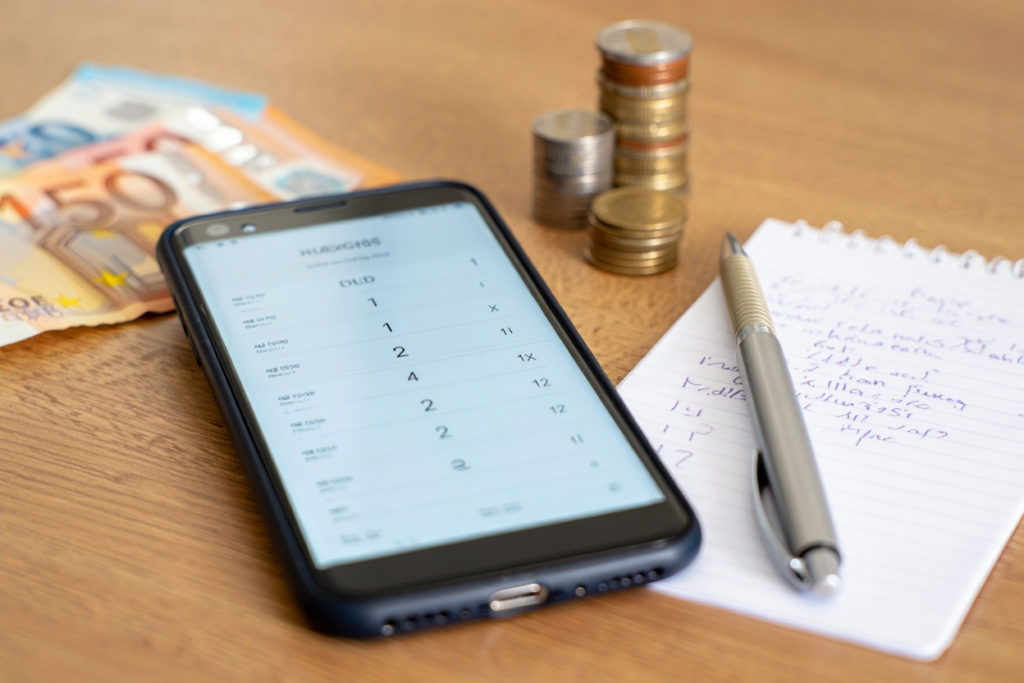
The foundation of football betting sits with understanding the basic match outcome. Every football game ends in one of three ways: a home team victory, a draw, or an away team victory. Sportsbooks use single characters to represent these outcomes.
1 means the home team wins. This notation comes from traditional betting systems where the home team appears first. If you bet on 1 and the match ends with the home side scoring more goals, your bet wins.
X represents a draw or tie. Neither team emerges victorious. This option didn’t exist in all betting markets historically, but it became standard because draws occur frequently enough in football to justify dedicated betting options. In professional football, roughly one in four matches end in draws, making this a statistically significant outcome.
2 signifies an away team victory. The visiting team scores more goals than the home side.
These three symbols appear on virtually every football betting slip worldwide. A sportsbook in London uses the same notation as one in Manila or Buenos Aires.
The Two-Way Bets: 1X and 12
Many bettors want to exclude one of the three possible outcomes. This is where combination bets come in. These wagers cover two of the three match results simultaneously.
1X means you’re betting that either the home team wins or the match ends in a draw. You lose only if the away team wins. This bet type works well when you believe the home team will either take the match or at minimum avoid losing. Mathematically, 1X covers approximately 60-65% of all possible outcomes in a typical match, which explains why odds for 1X bets tend to be shorter than single-outcome wagers.
12 covers both the home team victory and away team victory. With this bet, you win if either team wins. You lose only if the match ends in a draw. This option appeals to bettors who believe the game will be decisive rather than ending level. In competitive football leagues, draws happen frequently enough that 12 bets typically offer decent odds despite covering two outcomes.
X2 represents the third combination: either a draw or an away team win. Choose this when you expect the home team to struggle or when playing at home offers minimal advantage. In certain matchups, particularly when the away team possesses superior quality or when the home team lacks form, X2 becomes the logical choice.
Understanding Odds Structure for These Bets
The odds assigned to each bet type reflect probability. Home teams win more frequently in football because of crowd support and familiarity with the pitch. Consequently, 1 bets typically offer the shortest odds. The 1X combination usually offers moderate odds, better than betting on 1 alone but worse than betting on 2.
X bets traditionally carry longer odds because draws are less common than either team winning definitively. This creates an interesting dynamic where 1X often provides more balanced value than betting 1 and X separately. The odds for 1X should roughly equal the odds for winning bets on 1, multiplied and adjusted by probability, but sportsbooks often price combinations independently.
Football Betting Results and Outcome Verification
When football betting results are finalized, officials determine which symbol applies. The match outcome becomes official after the final whistle. If you bet 1X on a match that ends 2-1 to the away team, your bet loses because neither 1 nor X occurred. If the same match ends 1-1, you win because X within your 1X combination came through.
Extra time and penalty shootouts complicate things in cup competitions. Standard 90-minute match results determine football betting results in league play. However, in knockout cup matches, the final outcome after extra time settles the bet. Penalty shootouts typically don’t affect betting results because they’re treated as a continuation of the match result, with the team that wins the shootout credited with the match victory.
Decimal and Fractional Odds Presentation
Different betting markets present odds in different formats, but the underlying bet types remain constant. British sportsbooks traditionally use fractional odds like 2/1 or 5/2, while European and online operators favour decimal odds shown as 3.0 or 2.5. The 1X, 12, and X2 designations work identically regardless of odds presentation format.
Single Bets Versus Accumulators with These Codes
You can wager on 1, X, 2, 1X, 12, or X2 as single bets, risking money on just one match. You can also combine multiple matches using these codes in accumulator bets, where you need all selections to win for the bet to succeed. A typical four-match accumulator might include 1 on match A, X2 on match B, 1X on match C, and 2 on match D. All four outcomes must occur for the accumulator to pay out.
Regional Variations and Market-Specific Names
While 1X2 notation dominates globally, some regional markets use alternative terminology. Moneyline betting in North American sportsbooks achieves similar results using plus and minus signs rather than numerical codes. Asian handicap betting operates on different principles altogether, adjusting goal margins rather than simply picking outcomes. However, the fundamental 1X2 system remains the standard for football betting in Europe, Asia, Africa, and South America.
Practical Application: Reading a Betting Slip
Imagine browsing odds for Manchester City versus Liverpool. You see odds displayed as 1 (1.50), X (4.00), 2 (5.50). These numbers represent decimal odds. Betting £10 on 1 at 1.50 would return £15 total if City wins. The same £10 on 2 at 5.50 returns £55 if Liverpool wins. An 1X bet might be offered at 1.80, covering both a City win and a draw.
Professional bettors compare these prices across multiple operators. Sometimes one sportsbook offers 1X at 1.82 while another offers 1.80. Over time, small differences in odds compound into meaningful profit or loss differences.
Why These Codes Matter for Your Betting Strategy
Understanding what 1X, 12, and standard 1X2 notation means allows you to construct systematic betting approaches. You might develop a strategy where you consistently bet X2 on away teams in their final fixture of the season when home teams have already secured their finishing position. Or you might specialise in 1X bets on strong home teams in European competitions. The clarity these codes provide ensures your betting intentions match your actual wagers.
Misunderstanding these designations leads to expensive mistakes. A bettor intending to wager on a draw might accidentally select 12 thinking it includes draws, only to discover after the match ends 0-0 that their bet lost completely. Familiarity with these terms eliminates such errors.
The International Standard in Football Betting
The 1X2 system has become standard because it’s simple, unambiguous, and translates across languages and cultures. Whether you’re betting in English, Spanish, German, or any other language, these numerical symbols communicate identically. This universality means you can check odds anywhere and understand the basic betting structure instantly.