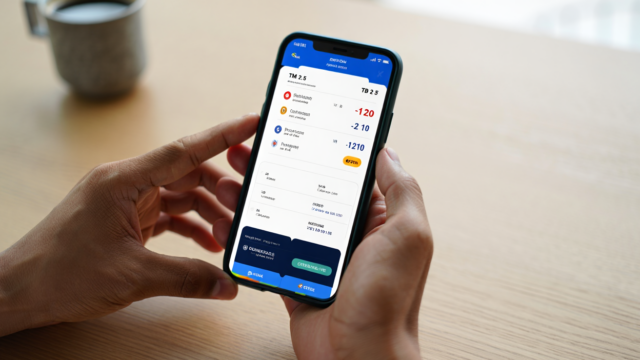
A total over 2 bet means wagering that a match will end with three or more combined goals. This is a specific mechanics of football betting that differs fundamentally from what casual bettors sometimes assume. If the final score is exactly two goals, your stake is refunded rather than lost. Only when the match produces one or zero goals do you lose the bet outright.
The bet applies to the entire match unless you specifically select a half or individual team total. For instance, you might place a total over 2 on just the first half, or you could bet that Manchester United will score 3+ goals in 90 minutes. Odds reflect the probability of these outcomes, with higher coefficients for matches expected to be tighter defensively.
When calculating payouts, multiply your stake by the offered coefficient. A $10 bet at 1.40 odds on total over 2 that results in a 1-1 draw produces a full refund of your original stake. If the match finishes 3-2 or any scoreline with three or more goals, you collect winnings based on the odds. Individual team totals operate the same way: wagering $10 at 1.75 on a team to score 3+ goals in a 3-1 victory yields $17.50 payout.
Both Teams to Score: The Mechanics and World Cup Context
Both teams to score (BTTS) bets require each side in a match to find the net at least once. The final margin is irrelevant; a 1-1 draw, a 2-1 finish, or even a 5-4 thriller all result in winning BTTS bets. This market focuses on attacking intent rather than final outcomes, making it distinct from standard match-winner predictions.
Odds for BTTS markets in the FIFA World Cup vary dramatically based on team quality and tournament stage. Group stage matches typically offer higher odds for BTTS because newly formed squads haven’t yet developed defensive cohesion. As the tournament progresses to knockout rounds, BTTS becomes riskier because teams prioritize preventing goals and adopt defensive formations more frequently.
The correlation between total goals and BTTS is strong but imperfect. A match with total over 2 suggests attacking football, yet a 3-0 result fails the BTTS condition. Conversely, a 1-1 draw counts as both goals and matches under 2 simultaneously, making the two bet types complementary rather than identical.
World Cup 2026 Favorites and Tournament Format
The FIFA World Cup 2026 begins June 11 with 48 teams competing across the United States, Canada, and Mexico. This format expands from the traditional 32-team structure to 16 groups of three teams, with 104 matches spanning 39 days. Sportsbooks have released tournament favorites based on qualifying performance and squad strength.
Spain leads at 5.50 odds, having progressed through qualifying undefeated. The Spanish squad relies heavily on Barcelona players, reflecting tactical consistency. France sits at 5.50 as well, having reached two finals in the last eight years with Kylian Mbappe as the focal point of attack. England trades at 7.00, while Argentina and Brazil share 9.00 odds. Portugal carries 10.0, Germany 15.0, the Netherlands 20.0, and Norway 25.0. Belgium stands at 35.0. Ukraine, attempting to qualify via playoffs, sits at 600.00 despite ranking 32nd in qualifying groups.
Analyzing Recent Form for Over 2 and BTTS Predictions
Historical data from the same tournament provides the most reliable foundation for predicting goal-heavy or open-play matches. Review a team’s last 5 to 10 matches within the current World Cup qualifying cycle rather than pulling data from friendlies or continental competitions. Group stage performance establishes baseline attacking and defensive rates before knockout intensity increases.
Home and away splits matter substantially. Teams playing in North America face significant travel fatigue, and a squad’s comfort in their region may differ from expected performance. Argentina’s results in 2026 venues versus previous World Cups warrant separate consideration. France’s ability to function in varied conditions carries weight, given their recent success across different tournament environments.
Fixture congestion in the new 16-team group format means squads face three matches in rapid succession. Fatigue introduces defensive vulnerabilities that inflate both teams to score probabilities. A team’s bench depth and rotation patterns during group stage determine which lineups face later opponents, affecting goal-scoring potential significantly.
Tournament Schedule and Match Groupings
The group stage calendar concentrates matches across specific scheduling tiers. Early group stage matches (June 18–21) often feature fewer goals as teams probe opponents cautiously. Subsequent group matches, particularly final rounds (June 23–27), encourage attacking because teams pursue victories to advance. Argentina versus Australia on June 22 appears early enough that both squads remain fresh, though defensive organization typically hasn’t solidified in opening fixtures. France meeting Brazil the same day showcases two historically attacking-minded units.
Building a Consistent Betting Strategy
Successful predictions require distinguishing between matches likely to produce high-scoring affairs and those featuring dominant defensive performances. Squad composition matters: nations with multiple strikers in midfield-heavy lineups generate more goals than teams built around defensive solidity. Spain’s Barcelona contingent emphasizes possession and precision rather than direct attacking, potentially limiting over 2 hits despite high tournament odds.
Avoid chasing odds on popular matchups between traditional rivals simply because media coverage suggests competitive intensity. Such fixtures often result in cautious, compact defensive displays. Instead, examine tactical mismatches where one team’s attacking style exploits another’s defensive weaknesses.
Set predetermined unit stakes and accept that football betting involves variance. A 55% win rate on total over 2 bets generates long-term profit despite significant losing streaks. Track results systematically, noting which team compositions and tournament stages yield predictable goal patterns. The 2026 expansion to 48 teams creates numerous lesser-known matchups with fewer scouting reports, offering opportunities for informed bettors to identify soft odds before sharper action compresses lines.
Weather and Venue Impact on Goal Totals
Extreme heat in Mexico during June affects stamina dramatically. High temperatures increase substitution frequency and reduce second-half intensity, often limiting goal production compared to temperate climates. Altitude in certain Mexican stadiums impacts ball flight and breathing, creating unpredictability in shooting accuracy. Canadian venues in early June present milder conditions potentially favoring attacking play.
Pitch quality varies considerably across three host nations. Well-maintained surfaces encourage faster, possession-based football generating more shooting opportunities. Worn fields favor compact, direct strategies reducing shot volume. Organizers’ commitment to ground maintenance in tournament stadiums typically exceeds club-level standards, but venues hosting non-traditional markets may present unfamiliar conditions.